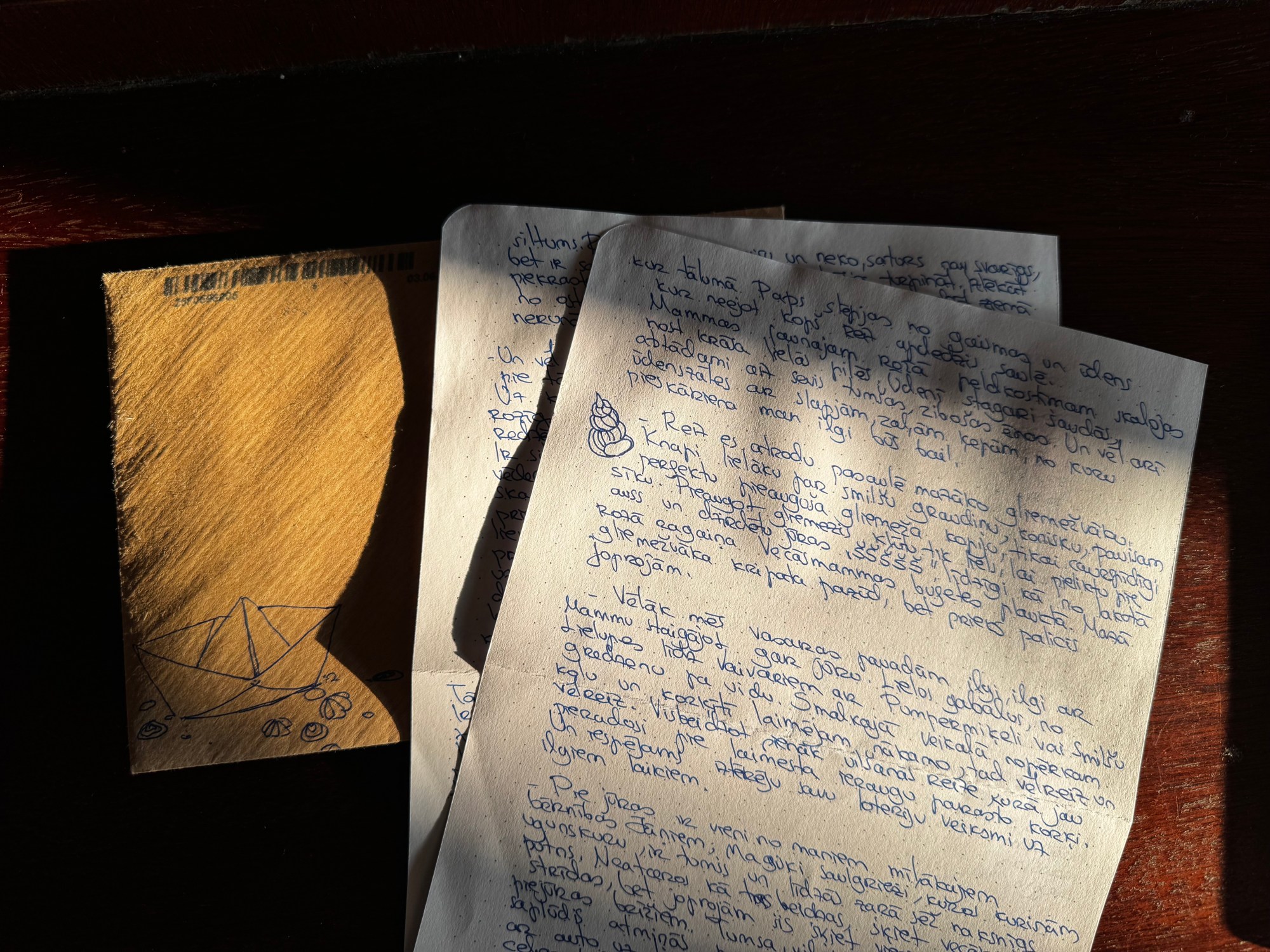
Maijā es izsūtīju aicinājumu jūras kopienām visā pasaulē: Uzraksti vēstuli jūrai. Otrā vēstule ir pienākusi 2025. gada 4. jūnijā – to raksta Ieva Ēkena no Rīgas, Latvijas.
Ir pelēcīgs, silts vasaras laiks. Tāds, kurā sēdēt pie jūras kailiem pleciem, bet omulības labad var ietīties šallē. Dūmaka, priedes, siltenas smiltis un mierīga pelēkzila jūra rāmiem vilnīšiem, kas viegli rotaļājas ar piekrastes oļiem. Kaut kur līdzās ieviļņojas kāds no mazajiem putniem. Pilnīgs miers un ūdens smarža. Tas ir tas, ko iedomājos, domājot par jūru. Un vēl – to, ka mierīgā šalkšana atgādina šalkoņu, kuru dzirdam mammas vēderā. To, kuru vēlāk dzirdam tikai ultrasonogrāfijas pastiprinājumā. Bet sākumā, šķiet, ir tieši tā – Tu atver acis, klausies, ir miers, drošība, silti un pavisam labi. Šalkas, sirdspukstu ritms un vieglas šūpas, kas ieaijā miegā.
Jūra! Domāju, ko lai Tev rakstu, un nolēmu pastāstīt par mirkļiem, kurus, esot pie Tevis, redzu. Par stikla pērlītēm gluži kā Hermanim Hesem, kuras iemirdzas uz Tev veltītās auklas. Dažāda izmēra, krāsu un faktūru, kuras pa vienai pacelt un skatīties cauri pret sauli. Dažas caurspīdīgi zilas un spīdīgas kā viļņu izskalotās zvejnieku tīklu bojas. Tās, kuras pēcāk var nopirkt stilīgu piejūras muzeju veikalos un ielikt plauktā pēc garā mājupceļa. Dažas kā lībiešu arheoloģisko kreļļu stikls. Stihiju nogludinātas, raupjas un pienainas, krāsainu piekaru virknēm pa vidu. Un dažas pavisam trauslas – plānas un mirdzošas kā bērna pūstie ziepju burbuļi.
– Ir zilas debesis, silts, pavisam viegls vējiņš rotaļājas pret ādu un matiem. Esmu pavisam maza, jūra ir liela, un varu plika rakties smiltīs. Mamma ar mani ceļ smilšu pilis; smiltis sajaukušās ar ūdeni, pil caur pirkstiem Gaudi ēkām līdzīgos kakšos. Es vēl nezinu Gaudi, bet zinu kūku “Skudru pūznis” un pils man izskatās tieši tā. Cepumīgi un garšīgi, garšīgi. Pie pils es izrakšu kanālu, un tajā dzīvos skudras!
– Un citā reizē jūras krastā ar mammu pētu kodīgos laimiņus. Dzeltenās zvaigznītes, kas aug pie jūras un vilcienu sliedēm. Mēs atrodam melnu beigtu vaboli, un es sarīkoju bēres. Kaut kur tālumā paps slēpjas no gaismas un ūdens, kur neejot, kopš reiz apdedzis saulē. Mammas jaunajam rozā peldkostīmam skalojas nost krāsa lielās pilēs. Ūdenī stagari šaudās, atstādāmi aiz sevis tumšas, zibošas ēnas. Un vēl arī ūdenszāles ar slapjām, zaļām ķēpām, no kuru pieskāriena man ilgi būs bail.
– Reiz es atradu pasaulē mazāko gliemežvāku. Knapi lielāku par smilšu graudiņu, konisku, pavisam perfektu pieauguša gliemeža kopiju, tikai caurspīgi sīku. Pieaugot gliemezis kļūtu tik liels, lai pieliktu pie auss un dzirdētu jūras “ššššš”, līdzīgi kā no lakotā rozā ragaiņa vecāsmammas bufetes plauktā. Mazā gliemežvāka kripata pazūd, bet prieks palicis joprojām.
– Vēlāk mēs vasaras pavadām, ilgi, ilgi ar mammu staigājot gar jūru. Lielos gabalus, no Lielupes līdz Vaivariem ar Pumpermiķeļiem vai Smilšu gredzenu pa vidu. Smalkajā veikalā nopērkam kolu un korķītī laimējam nākamo, tad vēlreiz un vēlreiz. Visbeidzot pienāk vilšanās reize, kurā, jau pieradusi pie laimesta, ieraugu parasto korķi. Un, iespējams, iztērēju savu loteriju veiksmi uz visiem laikiem.
– Pie jūras ir vieni no maniem mīļākajiem bērnības Jāņiem; maģiski saulgrieži, kuros kurinām ugunskuru, ir tumšs, un līdzās zarā sēž naksnīgs putns. Neatceros, kā tas beidzas, šķiet, vecāki strīdas, bet joprojām šis šķiet viens no īpašākajiem piejūras brīžiem. Tumsa, viļņi un nakts putns saplūdis atmiņās kopā ar rītausmas braucienu ar auto uz laukiem. Lec saule, virs pļavām ceļas balta dūmaka, gaiss smaržo un strīdi pazūd saulgriežu mierā. Bet varbūt tās īstenībā ir divas dažādas reizes, kas atmiņā sakusušas vienā.
– Un tad ir pauze. Drausmīgi neērts kauns par to, ka nemāku peldēt, tikai tā plunčāties viļņos, un pusaudzes pārdzīvojumi par ciskām. Ieraušos sevī un ilgi tīstīšos lakatos, kreklos un šallēs, līdz vienā brīdī pēc ilgiem gadiem nolemšu to, ka vislabāk pie jūras būt pilnīgi kailam. Aizvērt acis, ieurbt pirkstus smiltīs un ļaut, lai saule un vējš glauda ādu, bet aiz plakstiem plosās sarkani saules zaķīšu apļi. Sajust, ka zeme, gaiss un ķermeņa siltums ir viens pulsējošs organisms, kas elpo, parādās un pazūd bezgalīgā sirdspukstu ritmā kā viļņi. Vienota, bezgalīga matērija.
– Pirmās jūtas un attiecības ir jūra. Garas pastaigas no punkta uz punktu, pa ceļam malkojot priežu zaru vaļā atspiestu vīnu, ievelkot plaušās vaniļas cigareti (fuj) un runājot par plāniem, sapņiem un vēlmēm, to, ko gribas un kas patīk. Ilgi, pat pārāk, līdz vairs negribas un vairs nepatīk. Kājas grimst smiltīs, viļņi skalojas, vasaras vakarā blakus kāds smejas, bet zem ādas skrien tirpas, un ir sajūta, ka neesmu īstajā vietā. Mēģinu iemīcīt sevi smilšu formā, lai patiktu, atbilstu, būtu tāda, kā jābūt, un bužinu suni. Gribas mieru un to, lai ir labi, bet kaut kas šķiet nepareizi, līdz pienāk diena, kad arī tas beidzas – loģiskā kārtā ar pēdējo sarunu pie jūras. Kājas netur, un nokrītu ceļos kāpās.
– Un atkal kādu laiku negribas būt pie jūras. Jāļauj laikam aizpūst lieko uzslāņojumu, smilšu graudiņus, un tikai tad var atkal pietuvoties. Sākumā lēni un uzmanīgi, iemērcot ūdenī tikai kājas lielo pirkstu, tad pēdu, līdz atkal var priecīgi iebrist viļņos līdz lieliem.
Interesanti, ka sajūtas nemainās. Jūras smarža, smiltis zem kājām, prieks par atrastu gliemežvāku vai jocīgu kociņu, viļņi nemainīgi turpina skaloties pret krastu, neatkarīgi no tā, vai iekšēji esi trollītis Mumins, mazā Mija vai Morra. Jūra elpo.
– Izkāpjam no vilciena. Soļoju līdzās otram, šoreiz runājot par pavisam citām lietām. Par darbu, prātu, pastaigām, domām nerimstošā diskusijā. Pēdas min stingras, mitras smiltis, spīd saule, un kaut kur centrā ietrīsas siltums. Runājam par visu un neko, satur nav svarīgs, bet ir sarīga sajūta, ka šo sarunu gribēsies turpināt. Izlēkāt piekrastes bunkurus, izpētīt kāpas un ieraudzīt ziemā no ostas izskalotu krabi. Un varbūt pat nemaz nerunāt, tikai sadoties rokās un kopīgi klusēt.
– Un vēl pēc laika ir cits siltums, cits vējš un citi viļņi pie tās pašas jūras, tikai šoreiz pavisam silti un labi. Uz krūtīm, droši piesprādzēts somas migā guļ mazs rozīgs Susurs pūkainā “lācītī”. Pirms brīža kopā ir redzēti vilcieni, pētītas koku lapas, putni un skujas. Ir silts, soma līgojas, jūras šalkoņa atgādina mammas vēderu, kas pavisam nesen vēl bija mājas, un pie ausīm skan sirds. Tuk, tuk, tuk, šššššššš. Zem kājām dunošas priežu saknes un atsperīgas skujas, gaiss ir mitrs, un liekas, tuvojas lietus. Pārvelku Susura acīm pāri pretsaules aizsegu un dodos pēc kafijas, kuru pavisam uzmanīgi, lai neizlīst, izdzert pie jūras. Visa ir daudz, bet viļņi pamazām izskalo prātu un domas. Iedomājos, ka nevaru sagaidīt brīdi, kad varēsim kopā caur pirkstiem laist smiltis un celt Gaudi pilienu māju skudrām.
Tās ir dažas no pērlēm Tavā virtenē, Jūra! Ir vēl citas. Mazāk nozīmīgas, līdzīgas vai vēstulei pārāk trauslas. Daļa ir bijušas gaistošas un atstājušas vietu nākotnes māsām. Daļa ir tikai sajūtas – ieelpot sāļo gaisu, kad līst, un esi uz prāmja pie salām. Aizvērt acis un sajust to, ka esi prom no pasaules jūras vidū. Izlikties, ka esi Stīna no “Sālsvārnas salas vasarniekiem” vai piejūras Ronja. Domāt par to, ka vecuma galā pavisam jauki būtu gleznot un vadīt dienas pie jūras kā Tūves “Vasaras grāmatā” vai kā Muminu bākas salā, slēpjoties slepenā meža rožu krūmā. Bet līdz tam – vērt viļņu nopulētas atmiņu pērles uz Tava pavediena, ik pa brīdim sastopot savu Jūru!
Ieva, 2.06.2025.

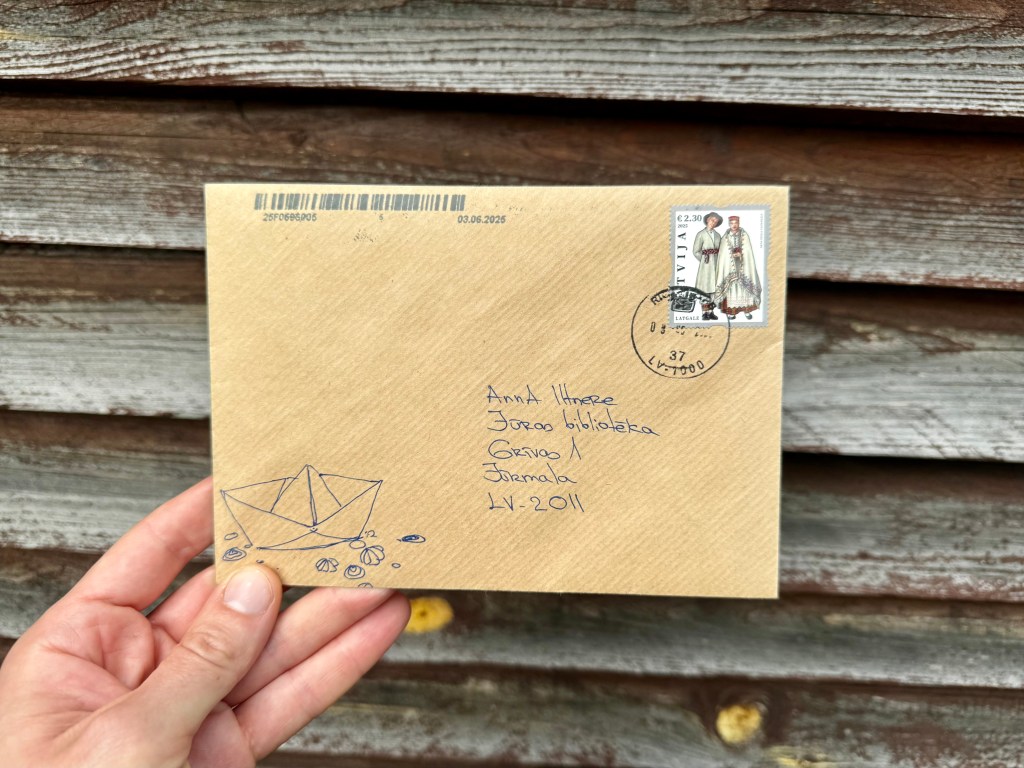
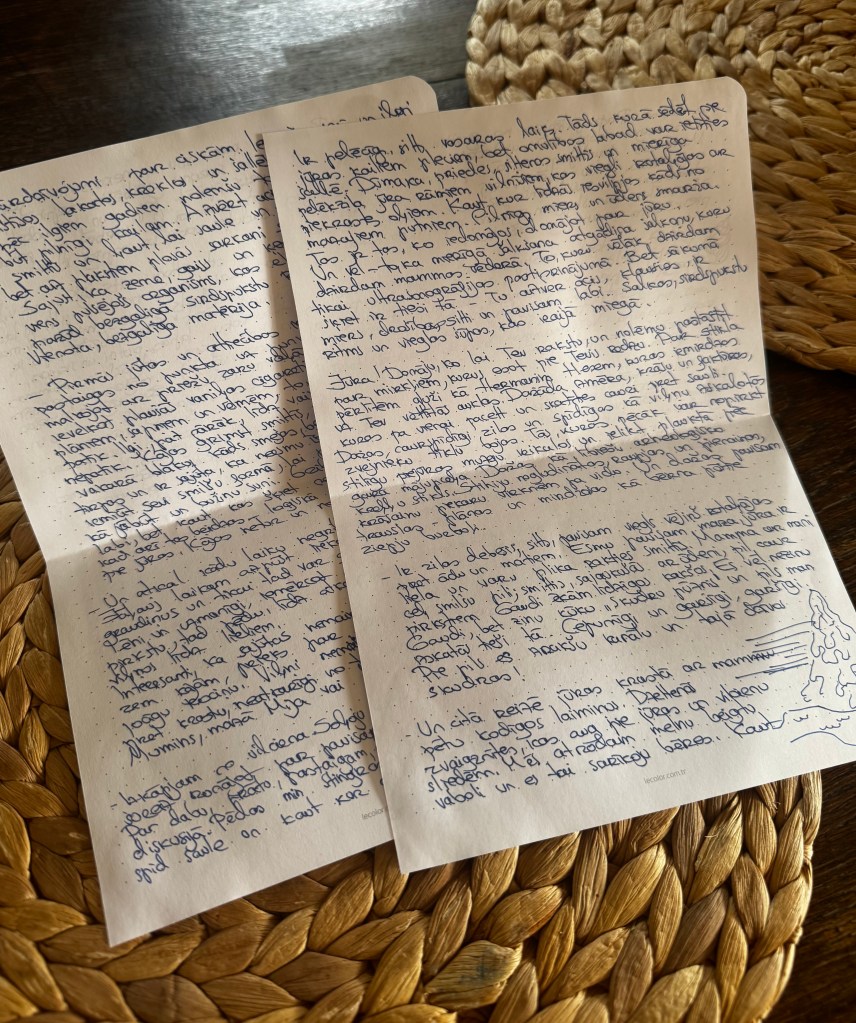
This May, I sent out a call to sea communities around the world: Write a Letter to the Sea. The second letter arrived on June 4, 2025, from Ieva Ēkena in Riga, Latvia.
It’s a grey, warm summer day. The kind of day where you can sit by the sea with bare shoulders, but for the sake of comfort, still wrap up in a scarf. There’s a mist, pines, pleasantly warm sand, and a calm grey-blue sea with gentle waves playing lightly with the pebbles on the shore. Somewhere nearby, a small bird rides the waves. Complete peace and the scent of water. That’s what I imagine when I think of the sea. And also – how its gentle rustling resembles the sound we hear in our mother’s womb. The one we later only hear amplified during an ultrasound. But in the beginning, it seems just like this – you open your eyes, listen, and there is calm, safety, warmth, and a feeling that all is well. The hush of waves, the rhythm of a heartbeat, and soft rocking that lulls you to sleep.
The sea! I thought about what I could write to you and decided to tell you about the moments I see when I’m with you. About the glass beads, just like in Hermann Hesse, that glimmer on the string I’ve dedicated to you. Different in size, color, and texture – each one to be lifted and looked through toward the sun. Some are transparent blue and shiny, like buoys from fishermen’s nets washed up by waves – the kind you later buy in stylish seaside museum shops and place on a shelf at the end of a long trip home. Some are like the glass from Livonian archaeological beads – smoothed by the elements, rough and milky, nestled among colorful pendants. And some are incredibly fragile – thin and sparkling, like soap bubbles blown by a child.
– The sky is blue, the wind is warm and light, playing against skin and hair. I am very small, the sea is huge, and I can dig in the sand naked. Mom and I build sandcastles; the sand is mixed with water and drips through fingers into little spires like Gaudí’s buildings. I don’t know Gaudí yet, but I know the cake called “Ant Hill”, and to me, the castle looks just like that. Cookie-like and delicious. Next to the castle, I’ll dig a canal, and ants will live in it!
– And another time, on the shore, Mom and I examine the goldmoss stonecrop – yellow stars that grow by the sea and train tracks. We find a dead black beetle, and I hold a funeral. Somewhere in the distance, Papa hides from the light and water, not going in ever since he got sunburned. The color is washing out of Mom’s new pink swimsuit in big drops. In the water, stickelbacks dart around, leaving behind dark, shimmering shadows. And also, the seaweed, in wet green tangles, touching which will leave me afraid for a long time.
– Once, I found the smallest seashell in the world. Barely larger than a grain of sand, conical, a perfect miniature of an adult shell – only translucent and tiny. If it grew, it would be big enough to hold up to your ear and hear the sea’s “shhhh,” like that lacquered pink horn in Grandma’s cabinet. The tiny shell disappeared, but the joy stayed with me.
– Later, we spend summers walking for long stretches along the sea with Mom. From Lielupe to Vaivari, with pumpernickel bread or a butter shortbread ring in between. At the fancy shop, we buy Coke and win another bottle under the cap, then again and again. Finally, the moment of disappointment comes – used to winning, I now see a regular cap. Maybe I spent all my lifetime lottery luck on those bottle caps.
– Some of my favorite midsummer nights from childhood were by the sea. Magical solstice evenings with a bonfire, darkness, and a night bird perched nearby in a branch. I don’t remember how it ended – maybe my parents argued – but it still feels like one of the most special seaside moments. Darkness, waves, and a night bird have all blurred together with the memory of a sunrise drive to the countryside. The sun rises, white mist hovers above the fields, the air smells sweet, and the arguments dissolve into solstice peace. Or maybe those were two different occasions, melted together in memory.
– Then comes a pause. An awful, awkward shame about not knowing how to swim – only splashing in the waves – and the teenage turmoil about my thighs. I withdraw into myself, wrapping up in shawls, shirts, scarves, until one day, many years later, I decide: it’s best to be completely naked by the sea. To close my eyes, dig my fingers into the sand, and let the sun and wind caress my skin while behind my eyelids red sun circles dance. To feel that earth, air, and the warmth of your body are one pulsating organism that breathes, appears, and disappears in the infinite rhythm of a heartbeat like waves. A unified, endless matter.
– First loves and relationships are the sea. Long walks from point to point, sipping wine pressed open with a pine branch, inhaling a vanilla cigarette (ugh), and talking about plans, dreams, and desires – what you want, what you like. Long talks, maybe too long, until you no longer want or like it. Feet sink into the sand, waves lap, someone laughs beside you on a summer evening, but under your skin, chills run, and you feel like you’re in the wrong place. I try to press myself into a sand mold – to be pleasing, to fit, to be the way I’m supposed to be – and pet the dog. I want peace and for everything to feel right, but something’s off, until the day comes when it ends – logically, with a final conversation by the sea. My legs give way, and I fall to my knees in the dunes.
– Then for a while, I don’t want to be near the sea at all. Time must blow away the extra layers, the grains of sand, and only then can I approach again. At first slowly and carefully – just dipping in a toe, then a whole foot, until I can once more happily wade in up to my thighs.
Funny how the feelings never change. The smell of the sea, the sand beneath your feet, the joy of finding a seashell or a strange stick – the waves keep lapping the shore, unchanged, whether you feel like Moomintroll, Little My, or the Groke. The sea breathes.
– We step off the train. I walk beside someone, this time talking about very different things – work, thoughts, walks, a never-ending discussion. Our feet tread firm, damp sand, the sun shines, and somewhere in the center a warmth stirs. We talk about everything and nothing – the content doesn’t matter, but the feeling that this conversation is one you’ll want to continue does. We leap over coastal bunkers, explore the dunes, and find a crab washed up from the harbor in winter. And maybe we don’t even need to talk – just hold hands and quietly be.
– And then later, there’s a different warmth, a different wind, and different waves by the same sea, only this time warm and truly good. On my chest, safely strapped in a baby carrier nest, sleeps a tiny pink Dormouse in a fuzzy “teddy bear” suit. Moments ago, we watched trains, studied tree leaves, birds, and pine needles together. It’s warm, the baby carrier sways, the sea’s rustling recalls the womb, which not long ago was home, and in the ears sounds a heartbeat: thump-thump, shhhhh. Underfoot, the pine roots rumble and the needles spring – moist air tells of rain to come. I pull the sunshade down over Dormouse’s eyes and go fetch coffee, sipping it very carefully by the sea, so it doesn’t spill. There is so much of everything, but the waves gradually rinse the mind and thoughts clean. I imagine the moment I can’t wait for – when we’ll sift sand through our fingers together and build Gaudí-drip castles for the ants.
These are a few of the beads on your string, Sea! There are others. Less significant, similar, or too fragile for a letter. Some have faded and made way for future sisters. Some are only feelings – breathing in salty air when it rains and you’re on a ferry by the islands. Closing your eyes and sensing you’re away from the world, in the middle of the sea. Pretending to be Stina from The Seacrow Island, or a seaside Ronja. Thinking how lovely it would be in old age to paint and spend the days by the sea like in Tove’s The Summer Book or like the Moomins on their lighthouse island, hiding in a secret wild rose bush. But until then – stringing wave-polished memory pearls onto your thread, occasionally meeting my Sea again.
Ieva, June 2, 2025.
Photos by Anna Iltnere / Sea Library
Write me if you want to send a letter to the sea: beachbooksblog@gmail.com
 SEA LIBRARY BOOKS
2 thoughts on “002: A LETTER TO THE SEA”